Posts

Showing posts with the label polymer processing

Power Up of Extruders/PLC - Wheel Blow Molder

Following is a extruder startup procedure for a wheel blow molding machine: 1. Turn on the plant chilled or tower water supply to the extruder heat exchanger and extruder feedthroat. 2. Turn on the power at the PLC wheel drive cabinet by raising up the handle in the top right corner. An audible alarm will sound. 3. Push the reset button that is located in the middle of the cabinet door. The button will illuminate. 4. Go to the PLC monitor and wait momentarily for the computer to boot up. 5. Press the ACK and the RESET touch button on the screen . This will silence the alarm. 6. Press the touch button that reads HYD. WATER HEATS in the lower left corner. A start screen will appear. 7. Press the start touch buttons for the pump heats only. 8. Press the MAIN touch button in the top right corner to return to the main screen. 9. Verify that the green lights below the water and heats label on the screen are illuminated. This indicates an “on” condition. 10. Press each individual extruder...
Safety precautions for injection molding

Safety is everyone's responsibility in the workplace. Safety is most often related to good maintenance and good housekeeping. Safety needs to be an attitude that if always present in your daily activities. Employees should not be hesitant to voice safety concerns in the workplace. Management is just as committed to safety as the operators on the floor; the primary difference is that the operators are usually the closest to unsafe conditions; keep management advised of unsafe conditions. The following list includes items which should be maintained to assure a safe working environment: 1. Floor and machine should be kept free of oil 2. Floor and machine should be kept free of pellets. 3. Never reach over or under machine guards. 4. Never climb between the bars when pumps are running. 5. Retract injection. unit before entering the bar space. 6. The front gate should have an electrical, hydraulic and mechanical safety device preventing clamp from closing when the front gate is open. 7...

Plastic pipes

The pipe sector is one of the most challenging construction sectors today. Economic pressures have led to fewer construction projects in many major markets, while specifiers have been increasingly expected to balance higher performance with reduced cost. Today's plastics provide the opportunity to overcome these challenges. The economic and environmental benefits achieved by plastic pipe are an outcome of features including: Zero corrosion — Plastics resist corrosion from water and many chemicals, reducing wear and tear and increasing longevity. Increased flexibility — Easy to install, even at low temperatures. Durable and tough material — Plastic pipes give a high resistance to fracture and fatigue Leak-free joint fusion — Buttwelding, socket welding, electro-fusion fittings Light weight materials — The light weight of plastic contributes to reducing man hours and the need for heavy equipment, such as cranes. Plastics are also easier to transport and store. Easier installatio...

2. Dry cycle mold - Validation procedure for injection molds

The second step in validating an injection mold according to injection mold validation flow chart is dry cycle mold . The steps before are: 1. Mold certification Purpose: The purpose of the dry cycle mold is to evaluate the mold mechanical actions for any gross problems prior to injecting plastic into the mold. The machine operator at the mold builder or molder should know how to adjust the settings on the injection unit to cycle the mold without injecting plastic into the tool. If at anytime during the dry cycle procedure there is a possibility that damage is being done to the tool or if the mold is not operating as designed, pull the mold from the press and have it examined by an experienced mold builder. This stage is often carried out prior to the customer being invited to the mold builder for the debug. If there are any machine/mold operation issues it is preferable for the mold builder to remedy this before customer attendance, saving unnecessary travel. If there is a serious ...

Head tooling – extrusion blow molding

Image
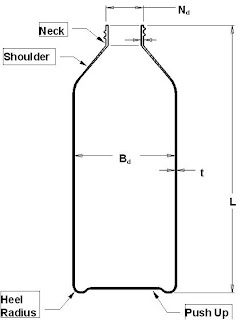
Mandrel and die dimensions are estimated based on container dimensional data, container symmetry, blow-up ratio, targeted container weight, neck finish requirements and the type of material (degree of parison swell) that will be used to produce the container. An initial blow-up ratio must be calculated using the container design dimensions and the required parison diameter. The required parison diameter will depend on the relative size of the container, the container design (handle or no handle) and the container neck finish requirements. Initial blow-up ratios may be calculated using the following equation. Blow up ratio = Bd / Nd where: Bd = Bottle diameter, in Nd = Minimum neck diameter, in The blow-up ratio is compared with the maximum recommended blow-up ratio of the selected material. Blow up ratios of 2 or 3 to 1 are considered normal when molding commodity resins such as polyethylene. A blow-up ratio as high as 4:1 is a practical upper limit. The blow up ratio for large contai...

Calculating the consumption of polymer

What Is It? A simple calculation that tells you the consumption of poly(ethylene terephthalate), PET by an injection molding machine. The Calculation Is... kg / hr = W x C x S Where; W = Weight of the container in kg. (e.g. 45 grams = 0.045 kg) C = Number of injection cavities S = Number of injection cycles per hour (shots) (3,600 / Cycle Time (sec) for one set of preforms) Example A machine with a cycle time of 14 seconds making a 35 gram bottle W = 0.035 C = 8 S = (3,600 / 14) = 257.1 kg / hr = 0.035 x 8 x 257.1 = 72 kg / hr

1. Mold certification - Validation procedure for injection molds

Image
The first step in validating an injection mold according to injection mold validation flow chart is mold certification . Purpose: The purpose of the mold certification is to ensure the mold is built according to specification before the mold validation procedures begin, e.g., critical dimensions on the first mold set are cut "Steel Safe" , core/cavity stack up dimensions are correct, cavity to cavity spacing is correct, cooling circuit layout, etc. The tool builder is required to provide verification of all critical metal tolerances on core and cavity ‘fits’ to be +/- 0,005 mm. The critical part dimension metal tolerances must be less than 10% of the plastics part dimension tolerances. In many cases, it will be necessary to go tighter than 10%. The mold certification should be performed at the tool builder while the mold is being fabricated to expedite any needed adjustments to the mold. Mold certification needs to be agreed upon when the mold order is placed. A copy of t...

Reinforced Plastics – Free Subscription!

Image
Free magazines, eBooks, publications, newsletter review from the polymer processing industry. Celebrating over 50 years of service to the composites industry worldwide. For over 50 years Reinforced Plastics has been the first choice of moulders, fabricators and end-users as a comprehensive source of impartial and informed comment on the global composites industry. Their unique partnership with all the main industry players enables them to empower their readers with up-to-the-minute news on all aspects of the industry. They are totally committed to being the best in the business and maintaining the support of their readers and advertisers in the continuing challenges of their industry. Geographic Eligibility : Select International Offered Free by : Elsevier Limited Request Free!

Modern Plastics Worldwide – Free Subscription!

Image
Free magazines, eBooks, publications, newsletter review from the polymer processing industry. Modern Plastics Worldwide is the only plastics publication dedicated to covering global business management issues, key technologies, and the latest manufacturing management trends for the international plastics industry. Topics range across all processes, including injection, extrusion, blowmolding, thermoforming, blown film, cast film, and compounding. Modern Plastics Worldwide also covers the latest technology developments in materials, design, equipment, processing, and applications from a business strategy perspective, marketing information on new markets, industry trends, economic influences, forecasts and more. Geographic Eligibility : USA, Canada, Mexico, Selected International (Print or Digital version) Request Free! Canon Plastics Group - the Voice of an Industry Canon Communications LLC is a strategic partner to the plastics industry. Both of our publications, Injection Molding Ma...

Injection Molding Magazine – Free Subscription!

Image
Free magazines, eBooks, publications, newsletter review from the polymer processing industry. IMM is the only publication devoted exclusively to the injection molding marketplace, consisting of custom and captive molders, contract manufacturers, OEM companies, part designers, moldmakers, and key members of the supply channel. Readers prefer IMM's editorial content as it provides them with "how-to" advice that contributes to their success. Geographic Eligibility : USA, Canada, Mexico (Print Edition Only), Selected International (Digital Edition Only) Request Free! Canon Plastics Group - the Voice of an Industry Canon Communications LLC is a strategic partner to the plastics industry. Both of our publications, Injection Molding Magazine and Modern Plastics Worldwide , address the plastics industry from a unique viewpoint. Each one offers in-depth coverage of its subject matter that a generalist publication just can’t accomplish. Each viewpoint helps readers stay on top of ...

Injection mold validation procedure

To validate an injection mold, there are numerous items one must take into consideration before the mold is completed and work is ready to begin. First, it is advisable to hold a mold design review meeting with all involved parties prior to tool manufacture. Invite the mold builder, hot runner supplier, steel supplier, press supplier, resin supplier, and a strategic molder for the design review. Involving everyone early on in the process and keeping them informed throughout the building of the mold avoids needless complications. Once all the suppliers have been identified it is vital that they are all given training on the injection mold validation procedure , IMVP. The training should be done well in advance of the first mold qualification, if you have a pilot tool stage this is an ideal time. It could be done whilst the production tools are being manufactured. It is strongly advised the tool builder is made aware of the requirements of mold certification (steel measurements) before...

Injection mold validation flow chart

Image
The following steps are required in validating a injection mold according to injection mold validation flow chart. 1. Mold certification 2. Dry cycle mold 3. Process stability test 4. Gage repeatability & reproducibility (R&R) test 5. Mold viscosity test 6. Balance of fill analysis 7. Gate freeze test 8. Commissioning (multi-cavity analysis) 9. Design of experiments 10. Qualification (process capability study) 11. Mold metal Adjustments - centering process 12. Verification (30-day run)

Safety precautions for extrusion blow molding

Safety is everyone's responsibility in the workplace. Safety is most often related to good maintenance practice and good housekeeping. Safety needs to be an attitude that is always present in your daily activities. Employees should not be hesitant to voice safety concerns in the workplace. Management is just as committed to safety as the operators on the floor; the primary difference is that the operators are usually the closest to unsafe conditions; keep management advised of unsafe conditions. The following list includes items which should be maintained to assure a safe working environment: 1. Floor and machine should be kept free of oil. 2. Floor and machine should be kept free of pellets. 3. Never reach over or under machine guards. 4. Never climb between the tie bars when hydraulic pumps are running. 5. Never disconnect or by-pass safety switches on guards. 6. In order to prevent mechanical hazards such as limbs being drawn into or trapped in the machinery, operators shoul...

Acetaldehyde A.A. in poly(ethylene terephthalate) processing

Image
Acetaldehyde A.A. is an organic chemical compound with the formula CH 3 CHO . Is a colorless gas at room temperature and has a strong fruity smell. It occurs naturally in many fruits and other foodstuffs is used as a flavor enhancer for certain products and is produced by plants as part of their normal metabolism. Acetaldehyde is also generated during the production and injection processing of poly(ethylene terephthalate), PET material. It can cause an off-taste in bottled water. Generally, most acetaldehyde problems originate in the barrel during the injection process. All PET resins have some residual acetaldehyde after being manufactured, the quantity will vary according to the grade. Acetaldehyde is only generated while the PET resin is in its melt condition, therefore it can only be controlled by adjustments in the barrel (90%) and hot runner (10%) of the machine. The generation of acetaldehyde is not linked to moisture content of the material, although in the process of be...

Which poly(ethylene terephthalate), PET resin is the best one?

Image
Poly(ethylene terephthalate), PET resins have several basic differences follow this notes and find the one which is the best for your application. 1. Intrinsic Viscosity, I.V. - ranging from 0.72 up to 0.85 for injection stretch blow molding. 2. Polymer Type - Homopolymer or Copolymer 3. Residual Acetaldehyde A.A Level - Normal or Reduced 4. Cosmetic Grades - Able to resist crystallization. 1. Intrinsic Viscosity, I.V. PET material for bottles is available in I.V. levels from 0.72 up to 0.85. Lower I.V. is more suited to fine details but will give lower strength in the final container and will have more tendency to flash. High I.V. material will give a stronger bottle but it may be impossible to form fine details in the preform or bottle. Low I.V. materials tend to be better if you need to blow an intricate shape but will result in a container having less strength and will become more difficult to control in the stretch blow process. A higher I.V. material will give better overall...

W - Polymer Processing Glossary of Terms

Weld Line - The point on a part where two plastic flow fronts meet during injection. Witness Line - A visible line on part due to two molding surfaces coming together. Witness lines always occur at parting lines.

V - Polymer Processing Glossary of Terms

Variation - A change in the value of a measured characteristic. Vent - A shallow channel in the mold to allow air to escape from the cavity during injection. Virgin Material - Plastic material that has not been subject to use or processing other than that required for its initial manufacture. Viscosity - Internal friction or resistance to flow of a melt or liquid. The constant ratio of shearing stress to shearing rate. It is a measure of the materials resistance to flow.

U - Polymer Processing Glossary of Terms

Ultimate strength - Term used to describe the maximum unit stress a material can withstand before breaking when subjected to a load in compression, tension or shear. Undercut - An indentation or protuberance on a part that impedes the removal of core and/or cavity.

T - Polymer Processing Glossary of Terms

Tensile strength - The resistance of a material to longitudinal tension stress. Thermal conductivity - Ability of a material to conduct heat. Thermal degradation - Deterioration of material by heat. Thermal diffusivity - The ability of a material to transfer heat per unit time and area. Thermoplastic - Capable of being repeatedly softened by heat and hardened by cooling. Thermoset - A material that will undergo or has undergone a chemical reaction by the action of heat, catalysts, ultraviolet light,etc. Three-plate mold - Mold with two parting lines, one for part and the other to free trapped cold runner. Two-plate mold - Mold with one parting line used to free both part and runner.

S - Polymer Processing Glossary of Terms

Shear - An action resulting from applied forces which cause or tends to cause two contiguous parts of a body to slide relative to each other in a direction parallel to their place of contact. Shear heating - Frictional heat generated within a plastic due to shear forces either in the extruder or in the runner system during injection. Shot - The yield of parts from a mold after one complete molding cycles, including scrap. Shot capacity - The maximum amount of material that the injection units ram or plunger can push out in one forward stroke. Shot size - The amount of plastic required to fill the mold. Shrinkage - The decrease in dimensions a plastic undergoes from molten state to a solid state. Shrinkage is compensated for by packing pressure, but some material shrinkage occurs after gate is frozen and for as much as 24 hours after it is molded. Sink Mark - An imperfection or depression in the surface of a part, generally cause by non-uniform shrinkage. SPC - Statistical Proce...